

Letting property in Kildare and Meath is straightforward in principle: prepare the property, set a compliant rent, find a good tenant, register with the RTB. What changed on 1 March 2026 is that several of those steps now carry new legal requirements that most landlords letting in this area aren’t yet across.
Get them right and this remains a strong market to be in. Get them wrong and the consequences range from an invalid rent notice to losing access to RTB dispute resolution entirely.
This guide covers what you need in place before listing, the specific rules that changed this year, tax relief you may not be claiming, and how to decide on the right level of agent support for your situation.
The Rental Market in Kildare and Meath Right Now
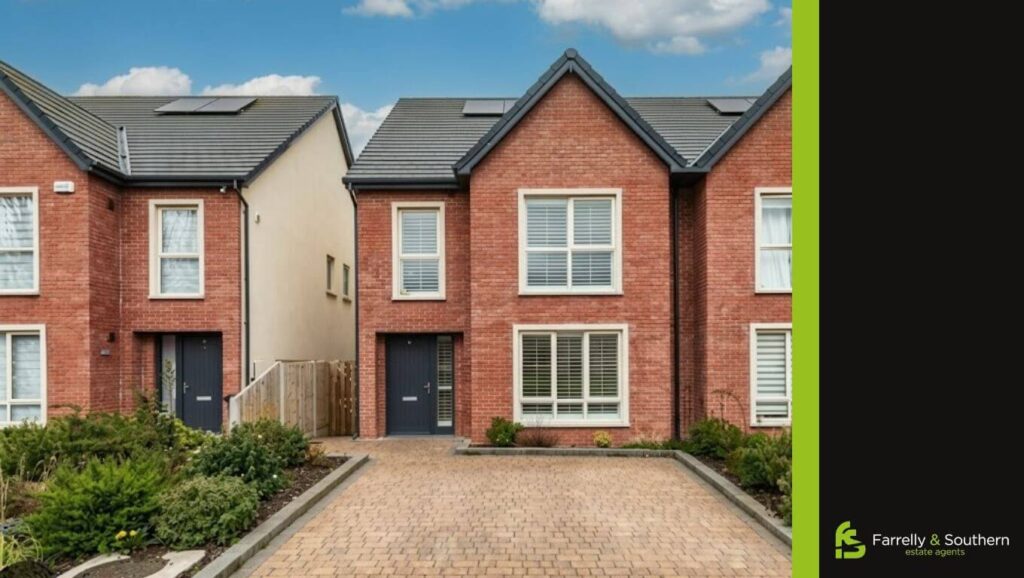
Both counties sit firmly within the Greater Dublin Area. That means strong, consistent demand from commuters, university staff and students, healthcare workers and young families who can’t stretch to Dublin prices but still need to be within commuting distance of the capital.
Demand for rental properties across the Kildare and Meath commuter belt has remained high despite broader economic uncertainty. Kildare in particular, with towns like Maynooth, Leixlip, Celbridge and Kilcock, continues to attract tenants who value the combination of good transport links, quality schools and lower rent compared to Dublin.
Maynooth University alone generates steady year-round demand for rental homes within commuting distance. Meath mirrors this pattern, with Navan and Trim drawing tenants who prioritise space and value over proximity to the city centre.
Vacancy rates across GDA commuter towns have remained below 5% in early 2026, according to data from the major portals including Daft. In the strongest locations, that figure is lower. Well-presented, professionally managed properties in this area regularly let within 3 to 14 days. Properties that are poorly presented or slow to come to market can sit for several weeks longer. In a high-demand rental market, that gap costs real money.
The fundamentals for landlords are sound. What’s changed is the regulatory landscape.
What Do You Need Before Letting a Property in Ireland?
A lot of landlords focus on finding a good tenant. The professional ones focus on making sure the property is legally ready before a tenant ever sees it. The stakes are concrete: a missing BER cert means you can’t legally advertise. A failed minimum standards inspection can void a tenancy.
An unregistered tenancy leaves you with no access to RTB dispute resolution if something goes wrong.
Building Energy Rating (BER) certificate. A legal requirement, not a formality. You can’t advertise a residential property for rent without a valid BER cert. If yours is out of date or was never done, commission one before listing. For apartments to rent and houses to rent, the BER rating must appear in all advertising, including any online listing.
Minimum standards compliance. Your property must meet the Housing (Standards for Rented Houses) Regulations 2019. This covers heating, ventilation, natural light, sanitary facilities, the condition of the structure and the standard of fixtures. If you haven’t had the property assessed against these standards recently, do it before a tenancy begins. A complaint mid-tenancy is a worse time to find out.
Smoke alarms, carbon monoxide detectors and fire safety. Interconnected smoke alarms are mandatory under updated regulations. Carbon monoxide detectors must be fitted in rooms with fuel-burning appliances. One-bedroom apartment or five-bedroom house, the requirement is the same.
RTB registration. Every tenancy in Ireland must be registered with the Residential Tenancies Board within one month of the tenancy commencing. From March 2026, registration also requires floor area, number of bed spaces and BER. Failure to register leaves you without access to the RTB’s dispute resolution process. That’s the last position you want to be in if a tenancy goes wrong.
What Changed for Irish Landlords on 1 March 2026?

The Residential Tenancies (Miscellaneous Provisions) Act 2026 came into effect on 1 March 2026. The RTB has published a full guide to setting and reviewing private rents from 1 March 2026 if you want to read the rules in full. If you let property in Kildare or Meath and haven’t read through what changed, this section is worth your full attention.
And if you’ve been managing your own tenancy for several years without issue, it’s worth particular attention: the most common feedback from experienced landlords right now is that they assumed they already knew the rules.
The RTB Rent Register is now mandatory for rent setting. When you set the rent for a new tenancy or carry out a rent review, you’re now legally required to use the RTB Rent Register to verify that your proposed rent isn’t above market rent for your area. You must provide three comparable examples from the register, with the RTB registration number and rent paid for each, and include this in your rent notice. Skipping this step means your rent notice is invalid.
Notices must go to the tenant and the RTB simultaneously. When issuing a notice of rent review, you must send it to your tenant and submit it to the RTB on the same day. The notice must be given at least 90 days before the new rent takes effect. Send it to the tenant one day and the RTB the next, and the notice is invalid. The rent increase cannot proceed.
The inflation measure for rent increases changed. From 1 March 2026, the Consumer Price Index (CPI) replaces the Harmonised Indices of Consumer Prices (HICP) as the measure used to calculate permitted rent increases. The 2% annual cap still applies to most properties in Rent Pressure Zones in practice. But the calculation method has changed, so landlords managing their own rent reviews need to use the updated RTB rent calculator, not older methods.
Kildare and Meath are both Rent Pressure Zones. As part of the Greater Dublin Area, both counties are designated RPZs. Rent can only be increased once per year, capped at 2% or the rate of CPI inflation, whichever is lower. When re-letting a property that already had a tenant, you can’t automatically reset to market rent unless specific exemptions apply, such as the property not having been rented in the previous two years or having undergone substantial change.
Achievable rent growth in RPZs has been constrained to low single digits annually since the rules were introduced. Set realistic expectations from the start, and make decisions about sale versus long-term letting with accurate numbers in front of you.
If that prompts a question about whether to keep the property in the rental market at all, the next section is directly relevant.
Are You Claiming Your Rental Income Tax Relief?
Most landlords weighing whether to sell or continue letting are making that decision without one number in their calculation. The Residential Premises Rental Income Relief (RPRIR), introduced in 2024, is a tax relief available to private landlords who keep their property in the residential rental market.
Most eligible landlords aren’t claiming it.
The relief reduces your tax bill on rental income by up to €600 in 2024, €800 in 2025, and €1,000 in both 2026 and 2027. To qualify, you must keep the property in the rental market for four years from when you first claim. Exit the market during that period and the relief is clawed back.
Treat the four-year condition as a planning tool. Over the qualifying period, the total potential relief is €3,400 on top of your rental income. Factor it into the decision before you commit either way.
Letting Only vs. Full Property Management: Which One Is Right for You?
Most landlords in Kildare and Meath fall into one of two situations. You’re either a hands-on landlord who lives locally, has time to manage tenant queries and maintenance issues, and is comfortable handling the administrative side of a tenancy. Or you’re not.
A letting-only service covers the finding and vetting of a tenant, agreement of a lease, collection of deposit and first month’s rent, RTB registration, and handover. After that, you’re on your own. Fees for this service typically equate to one month’s rent or around 8 to 12% of annual rent, charged upfront.
A full property management service takes over ongoing responsibility. Rent collection, maintenance coordination, periodic inspections, RTB correspondence, handling notice periods and renewals. Management fees typically run between 8 and 15% of monthly rent depending on the scope of service. For landlords who work full time, live abroad, or simply don’t want a call about a broken boiler the night before a bank holiday, management pays for itself quickly.
Given the new simultaneous RTB notification requirements and the mandatory Rent Register steps, it also removes the risk of an invalid rent notice costing you months of lost income.
The right answer depends on your property, your location and your circumstances. But if you’re a first-time landlord, or if you have a property you can’t easily get to for viewings and inspections, management is usually the smarter choice.
What to Expect When You Instruct a Letting Agent in Kildare
When you instruct a letting agent in Kildare or Meath, you should expect more than a listing and a set of keys handed over. At Farrelly and Southern, the process starts with a free rental valuation, where we advise on achievable rent given current market conditions and your RPZ position.
What distinguishes how we work is the compliance handling. We manage the RTB paperwork from day one, including the new simultaneous notification requirements introduced in March 2026. Rent review notices go to your tenant and the RTB on the same day, with the correct Rent Register comparables attached. Most DIY landlords aren’t getting this right currently. An invalid notice means the rent increase can’t proceed, regardless of how reasonable the amount is.
The landlords we work with consistently tell us the same thing: the value isn’t just in finding a tenant quickly, it’s in knowing the paperwork is right. Emma and Rebecca both hold formal qualifications in auctioneering and property. In practice, that means when legislation changes, as it did in March 2026, clients are told about it and their tenancies are updated accordingly. Not left to find out from a failed rent notice.
Request a free rental valuation and find out exactly what your property could achieve in the current Kildare and Meath market.
Frequently Asked Questions
Do I need a letting agent to rent my property in Ireland?
No, you can let your property privately. But you’re still legally responsible for all compliance obligations regardless of how the tenant was found. RTB registration, minimum standards, rent setting using the RTB Rent Register and proper notice procedures all apply whether you use an agent or not.
What is a Rent Pressure Zone and does it apply to my property in Kildare or Meath?
Yes, both counties are designated Rent Pressure Zones as part of the Greater Dublin Area. The full breakdown of what that means for rent reviews, re-letting and the new RTB Rent Register requirement is covered in the March 2026 rules section above.
How much does a letting agent charge in Ireland?
Letting-only fees typically run to one month’s rent or 8 to 12% of annual rent, charged upfront. Full management fees are usually 8 to 15% of monthly rent depending on the scope of service. At Farrelly and Southern, we’re upfront about pricing from the first conversation.
What documents does a landlord need to keep for an Irish tenancy?
At a minimum: the signed lease agreement, RTB registration confirmation, proof of deposit received, an inventory of the property at commencement, utility meter readings at the start and end of the tenancy, and records of any rent review notices issued. Without these, you can lose an RTB dispute even when you’re entirely in the right. The board can’t find in your favour on the basis of what you remember.
What is the minimum notice period if I need to end a tenancy?
Notice periods scale with how long the tenancy has run, from 28 days for under six months up to 224 days for eight years or more. You also need a valid legal reason to terminate. If you’re ending the tenancy specifically to sell, the process works a little differently. Our notice-to-sell guide covers it in full.
What is the RTB Rent Register?
An online database of registered tenancy data that landlords must now consult when setting or reviewing rent. From 1 March 2026, providing three comparable examples from the register is a legal requirement when issuing any rent notice. Miss it and the notice is invalid.
How to Let Property in Kildare and Meath Without the Compliance Risk

The landlords who have a smooth experience in this market aren’t necessarily the most experienced ones. They’re the ones whose paperwork is current. A well-presented property with a solid lease, a properly registered tenancy and correctly filed rent notices brings in better tenants and runs longer without disputes. It also gives you somewhere to stand if a problem does arise.
The landlords who struggle aren’t usually careless. They’re working with information that’s two or three years out of date. The March 2026 changes to RTB procedures, the new Rent Register obligations and the updated RPZ rules aren’t widely understood yet, even by landlords with real experience behind them.
The gap between knowing the old rules and knowing the current ones is exactly where things go wrong.
Get your free rental valuation from Farrelly and Southern. Find out what your property is worth in the current Kildare and Meath market, and what it takes to let it correctly in 2026.