

Selling a house in Ireland follows a five-phase process: preparing the property, assembling your legal documents, marketing, handling offers, and closing. This checklist covers every step in the order it actually happens, from getting a valuation to handing over the keys. The problems that delay sales, or kill them entirely, almost always start before the For Sale sign goes up.
Before You List: Property and BER Preparation
The preparation stage is where the sale is won or lost. Most sellers focus on the end result. The ones who sell quickly and at the best price focus on this phase.
Get a Professional Valuation
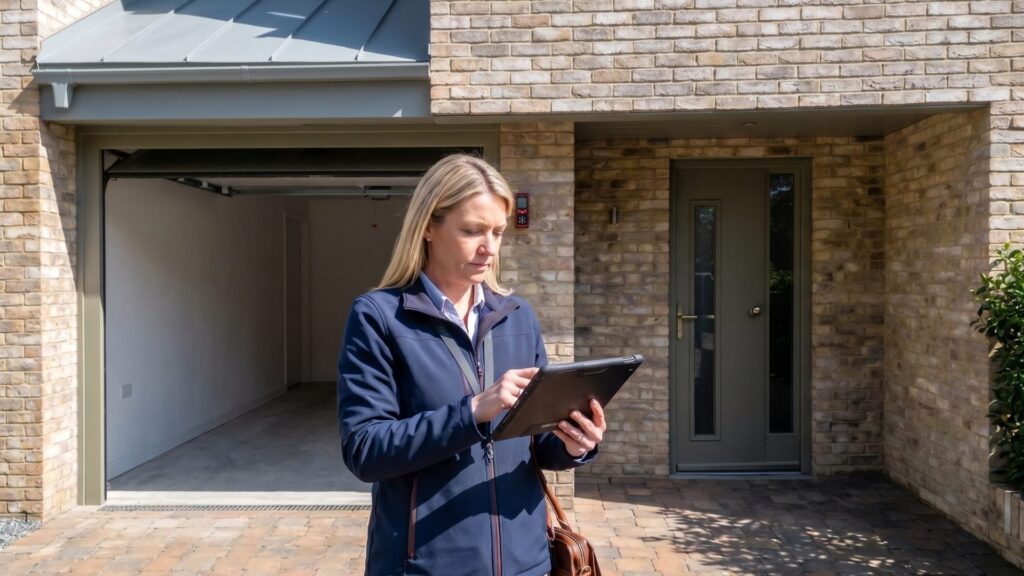
Your first step is understanding what your property is actually worth in the current market. A professional market valuation, carried out by a local estate agent who knows your area, gives you a realistic asking price and a basis for every financial decision that follows. It also gives you the confidence to hold your position when offers come in below what you know the property is worth.
In Kildare and Meath, the commuter belt dynamic means pricing is heavily influenced by proximity to transport links and local infrastructure, not just property size. Properties within easy reach of commuter rail stations, including Maynooth, Hazelhatch and Celbridge, Newbridge, and Kildare town, consistently see shorter time on market and stronger bidding than comparable homes further from those links. Local knowledge matters here. You can request a free property valuation directly if you want a current picture of what your home is likely to achieve before committing to anything.
Get a Valid BER Certificate
A valid BER certificate is a legal requirement before you list your property. There are no exceptions. The building energy rating for your house must be included in any property advertisement, whether on Daft, MyHome, or anywhere else.
If your existing cert is over ten years old, you need a new one. If you have carried out significant insulation or heating upgrades since the original assessment, you may also benefit from a fresh BER rather than relying on an outdated rating. A stronger energy rating is an increasingly meaningful selling point, particularly for buyers using green mortgages. Commission a registered assessor as early as possible.
How to Prepare Your Home for Sale
Potential buyers form an opinion within seconds of arriving. Gardens, driveways, front doors, and entrance halls carry disproportionate weight. A renovation is rarely necessary, but a thorough clean, fresh paint in neutral tones, and resolved minor repairs are almost always worth doing.
Be honest with yourself about what needs attention. Leaving obvious defects visible during a viewing invites buyers to assume the problems they cannot see are worse. Your estate agent can advise specifically on what work is commercially worth doing before you list.
Legal Documents You Need to Sell a House in Ireland
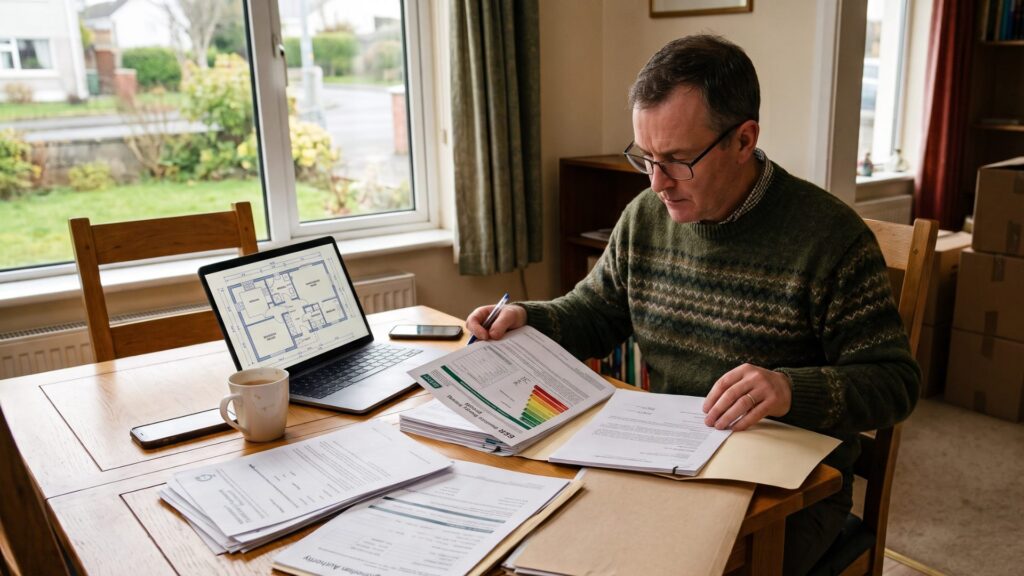
Most sales that slow to a crawl, or fall through entirely, do so here. If your documents are not ready when a buyer is ready, you are the bottleneck. Your buyer gets nervous. Their solicitor starts asking questions yours cannot yet answer. Start gathering everything below before you go to market, not after you go sale agreed.
Appoint a Solicitor Before You List
Most sellers appoint a solicitor after they go sale agreed. That is the wrong order. Appoint yours before you go to market. Your solicitor needs time to gather documents before contracts can be issued, and some of those requests cannot begin until they are instructed.
Locate Your Title Deeds
Your solicitor needs the title deeds to prepare the contract for sale. If you have a mortgage on the property, the deeds are held by your bank or lending institution. Requesting them can take two to eight weeks depending on the lender, and that clock does not start until your solicitor submits the request. In practice, sellers who appoint a solicitor after going sale agreed often find themselves waiting weeks before contracts can even be drafted.
A land registry compliant map must also confirm the boundaries of your property. This is particularly important for one-off rural properties. If your boundary does not match what is recorded, you will need to resolve it before contracts can issue.
BER Certificate: What Your Solicitor Needs
Both the BER certificate and the accompanying advisory report need to be available for your solicitor. This is separate from your estate agent’s requirement to include the rating in marketing. Two different uses of the same document, and both must be covered.
Planning Permission and Certificates of Compliance
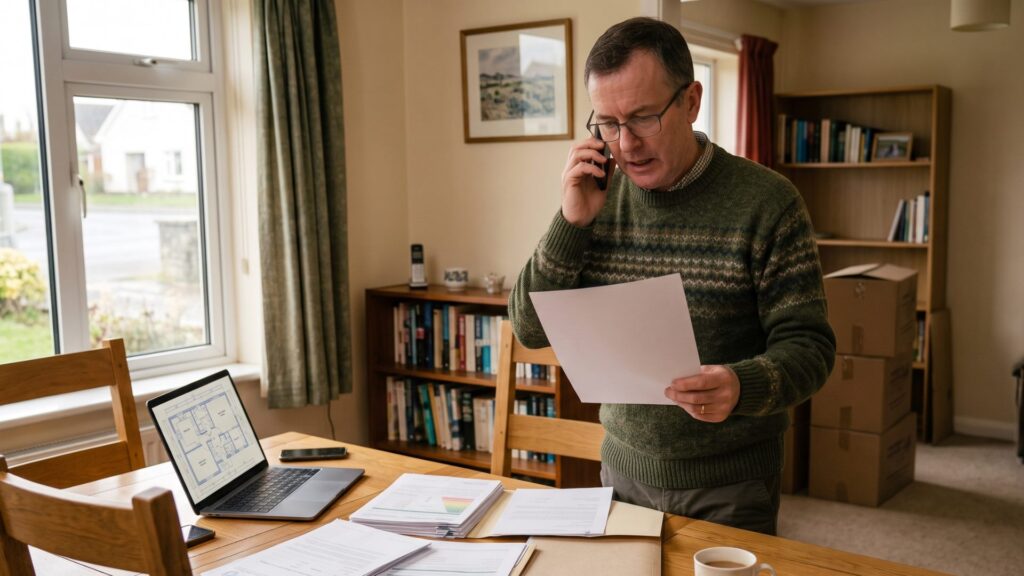
If you have carried out any extensions, attic conversions, garage conversions, or other structural works since the property was originally built, you need planning documentation in order. Your buyer’s solicitor will look for planning permission for the works and a cert of compliance confirming that the finished work matches what was permitted and meets building regulations.
If works were carried out without planning permission, all is not necessarily lost. The seven-year rule means that no enforcement action can be taken in respect of unauthorised development completed more than seven years ago. However, you will still need an architect or surveyor to confirm the works are in compliance with building regulations, and in many cases a retention application may be necessary.
Do not assume your solicitor or estate agent will flag this. Check it yourself now.
Local Property Tax
Your LPT payments must be up to date. Your solicitor will need a printout from Revenue showing that local property tax has been paid from 2013 to the current year, and that the household charge was paid for 2012 where applicable. If you are selling during the year, pay the full year’s LPT at the outset. It will be apportioned on closing, so you will recover the unused portion.
NPPR Certificate of Discharge
Non-Principal Private Residence tax applies if the property was not your principal private residence at any point between 2009 and 2013. Your solicitor will need a certificate of discharge for each relevant year. Not a receipt. The certificate itself, obtained from your local authority. Processing times vary, so request it as soon as you know it applies.
Capital Gains Tax
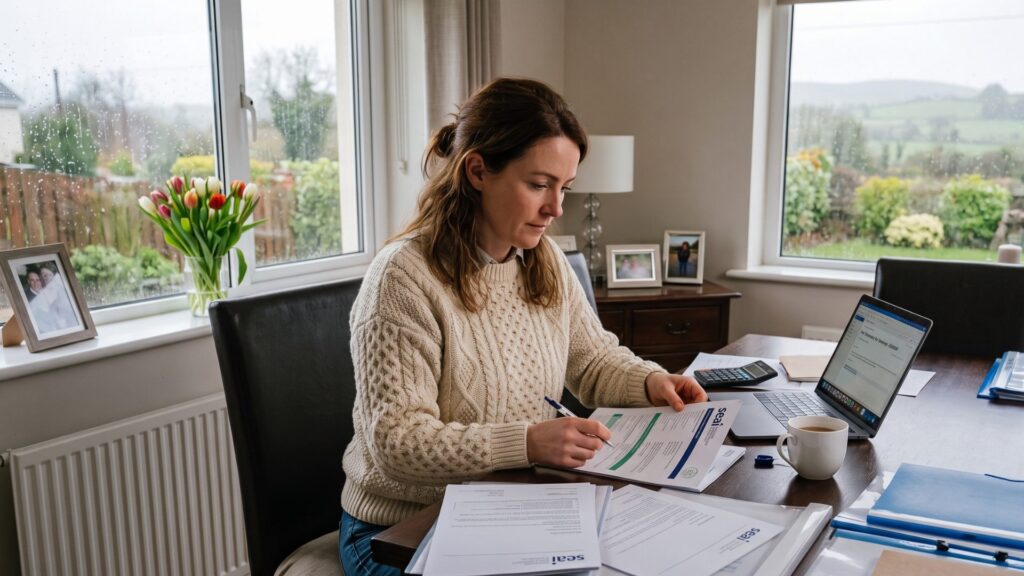
Selling a property that is not your primary residence, or one that has increased in value since you bought it, may trigger Capital Gains Tax at 33 percent on any gain. Revenue publishes specific guidance on CGT for house sales, including how Principal Private Residence Relief works and when a return must still be filed even if no tax is due. CGT is not calculated at closing. It falls due in the tax year of the sale, with a filing deadline that depends on the date of the transaction. Get your solicitor and, where relevant, a tax adviser involved early. This is not something to resolve in the final weeks.
Family Home Protection Act
Married sellers need to be aware of this one even when the property is in one name only. The Family Home Protection Act requires the consent of both spouses to sell a family home. Both will need to sign a declaration on completion, and you will need to produce a marriage certificate. For a sale following a legal separation or divorce, your separation agreement will determine what your solicitor requires. Raise this before you list, not after.
Septic Tank Registration
An unregistered septic tank will stop your sale. That is the short version. Your buyer’s solicitor will look for evidence of registration with the National Waste Water Registration Scheme, and if you cannot produce it, the sale stalls until you can. Registration takes several weeks to process. Start immediately if it has not been done. For properties with a modern sewage treatment unit, the service contract agreement may also be required.
Selling an Apartment: Management Company Requirements
Apartment sales carry a step that house sales do not: your solicitor must raise formal queries with the management company. They need confirmation that your service charge is paid up to date and a copy of the MUD Act documentation. Any arrears will need to be cleared before or from the sale proceeds. Management company replies can add two to six weeks to conveyancing when responses are slow. Request them early.

How to Market Your Property for Sale
With the legal groundwork underway, the focus shifts to how your property reaches potential buyers and how it is presented when it does. Most residential sales in Ireland proceed by private treaty, though auction can be worth considering for properties in high-demand areas or where a competitive bidding environment is likely to drive a stronger price. Your agent will advise which route suits your property.
Choose the Right Estate Agent
Your estate agent manages pricing advice, viewings, negotiations, buyer confidence through six weeks of conveyancing, chasing solicitors when things slow down, and keeping a nervous buyer from quietly withdrawing. That is what the job actually is. The difference between an agent who does all of that and one who only handles the listing is felt at every stage of the sale.
Ask any agent you consider about their recent sales in your area, their typical time from listing to sale agreed, and how they handle the period between sale agreed and closing. That last question is the one most sellers forget to ask. It is also the one that matters most. Choose on evidence, not on the pitch.
Set a Realistic Asking Price
A realistic asking price attracts competitive bidding. Overpriced properties attract fewer enquiries, longer time on the market, and buyers who assume there is something wrong. Your agent’s valuation, combined with recent comparable sales on the Property Price Register, gives you the basis for a defensible and competitive price.
Photography, Floor Plans and Your Property Listing
Over 90% of buyers begin their property search online. The first viewing most buyers take is on a portal, not in person, which means your listing photographs are doing the work that a first impression used to do at the front door. Professional photography is not optional in a competitive market. Your listing should include high-quality images, an accurate floor plan, and a detailed description that focuses on facts, not adjectives. South-facing garden, new roof in 2021, short walk to the train station. Those details matter to buyers making shortlists.

What Happens When You Go Sale Agreed?
Once offers come in, your estate agent manages the process. Here is what to understand before you reach this point.
Your agent will hold the booking deposit once you have accepted an offer. The booking deposit is not legally binding. Either party can withdraw before contracts are signed. Do not cancel your mortgage, give notice on a rental, or make irreversible financial commitments based on a booking deposit alone.
The sale becomes legally binding only when contracts are signed and the full 10 percent deposit is paid. Your solicitor will issue contracts to the buyer’s solicitor. If your documents are ready, contracts can issue quickly. If they are not, you are waiting. And buyers who are waiting sometimes walk.
Once you go sale agreed, maintain communication with your agent and solicitor. Chase responses. Respond quickly to requests. The buyers are waiting on you as much as you are waiting on them, and momentum in the conveyancing process is entirely within your control.
What to Expect on Closing Day
Closing is the final stage of the selling process. On the closing date, your solicitor and the buyer’s solicitor exchange signed contracts and funds. You vacate the property and hand over the keys, either directly or through your agent.
Before closing, your solicitor will send you a completion statement showing the breakdown of the sale price, the mortgage redemption figure if applicable, solicitor fees, estate agent fees, and any other charges. The balance is your net equity from the sale.
The selling price will be recorded in the Property Price Register, which is publicly accessible. If that concerns you, raise it with your solicitor before contracts issue. There is nothing that can be done to prevent the recording, but knowing it in advance means you can plan around it.
Cancel all utilities from the completion date. Notify your insurer that ownership of the property has transferred. Keep all documentation from the sale for tax purposes.
The sellers who find this process straightforward are rarely the ones with the easiest properties. They are the ones who started preparing early enough that nothing caught them by surprise.
What Does Selling a House in Ireland Cost?
Understanding your likely costs before you list helps you plan your finances realistically.
| Cost | Typical Range |
|---|---|
| Estate agent commission + VAT | 1% to 2.5% of sale price |
| Solicitor fees | €1,200 to €2,500 (varies by complexity) |
| BER certificate | €150 to €300 |
| Engineer’s report (if works require compliance cert) | €300 to €600 |
| NPPR / LPT clearance documentation | Varies |
| Capital Gains Tax (if applicable) | 33% of taxable gain |
These figures are indicative. The solicitor fee in particular can run higher on transactions involving mortgage redemptions, planning irregularities, or title complications. For the full breakdown of selling costs including how fees are calculated and what to expect at each stage, ask for a detailed quote before you instruct anyone.
Common Questions About Selling a House in Ireland
How long does it take to sell a house in Ireland?
From listing to closing, a typical residential sale in Ireland takes four to seven months. Well-prepared properties with motivated buyers and clean titles can close in six to eight weeks from sale agreed. The main variables are how long the property sits on the market before going sale agreed, and how quickly the conveyancing process moves once it does. Preparation compresses the second variable significantly.
Do I need a solicitor to sell a house in Ireland?
Yes. There is no legal route around it for residential property transactions in Ireland.
What documents do I need to sell a house in Ireland?
The core list: title deeds, a valid BER certificate and advisory report, planning permission and certificates of compliance for any extensions or structural works, Local Property Tax clearance, an NPPR certificate of discharge if applicable, proof of septic tank registration if applicable, and management company documentation for apartments or managed estates. Having these ready before you go to market is the single most effective way to avoid delays at the conveyancing stage.
Get a Free Property Valuation in Kildare or Meath
If you are thinking of selling and want to understand what your property is worth before committing to anything, a free, no-obligation valuation is the natural first step. If you are unsure whether now is the right time, that conversation is the right place to start. Emma and Rebecca at Farrelly and Southern cover the Kildare and Meath market and can give you an honest, current picture of what your home is likely to achieve. There is no pressure to instruct. The valuation simply gives you the information you need to make the right decision for you.