

Selling a house to a family member in Ireland is completely legal. You can even sell it for one euro if you want to. What most people don’t realise is that Revenue doesn’t care what price you actually agree between yourselves.
That single fact catches out more families than almost anything else in Irish property law. Revenue taxes the transfer based on the market value of the property, not the price you actually charged, and if that value is wrong, the gap between what you agreed and what the house is really worth becomes a taxable gift whether you intended it as one or not. You think you’re doing your daughter a favour by selling her the family home for less than it’s worth. Revenue sees a gift, and gifts have thresholds, rates, and paperwork of their own. Get this part wrong and a kind gesture turns into an unexpected tax bill months after the deed of transfer is signed.
Here’s what actually determines whether your family sale goes smoothly or turns into a headache.
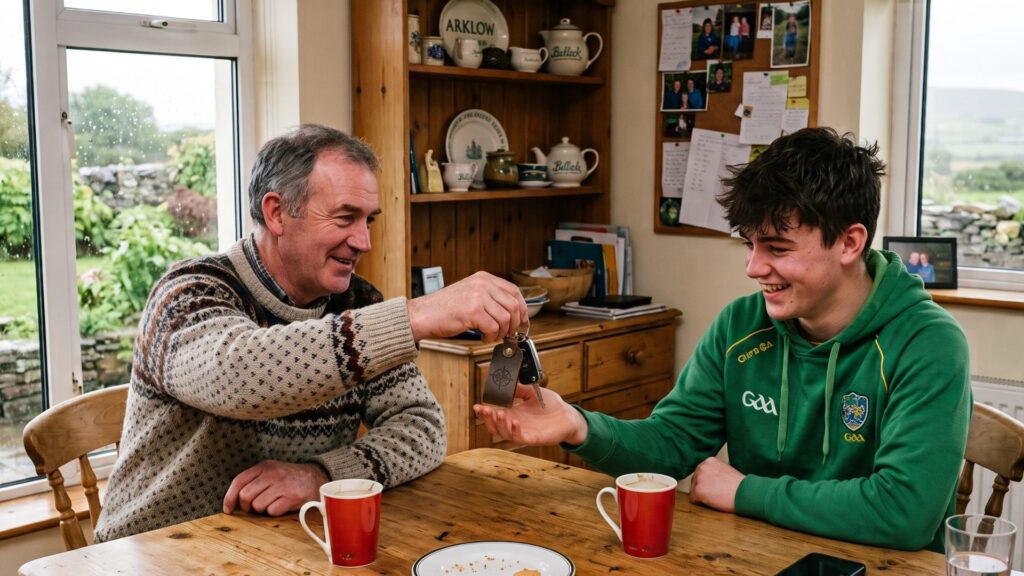
Can You Sell Your House to a Family Member?
Yes. The legal mechanics of transferring property to a family member are the same as any other sale: a contract, a solicitor on each side, a deed of transfer, and registration of the change in ownership.
Where it gets more complicated is tax.
This is why “selling to family” and “gifting property” often overlap in practice, even when they don’t overlap in your head. Revenue treats a below-value sale as a partial transfer of ownership with a gift attached, and taxes both halves accordingly, regardless of how straightforward the sale feels to the people involved.
How Much CAT Will You Pay on a Family Transfer?
Capital Acquisitions Tax, or CAT, is the tax charged on gifts and inheritances in Ireland, and it’s the one that catches families off guard most often. If part of your sale is treated as a gift, CAT is calculated on the value of that gift, not on the full value of the property.
The rate is a flat 33 percent above your lifetime tax-free threshold, and the threshold itself depends entirely on your relationship to the buyer. Revenue’s CAT thresholds are reviewed periodically, so it’s worth confirming the current figures before you rely on them.
| Relationship to buyer | Group | Lifetime tax-free threshold |
|---|---|---|
| Parent to child | Group A | €400,000 |
| Sibling, grandchild, niece or nephew | Group B | €40,000 |
| Any other relationship | Group C | €20,000 |
A parent transferring property to a child benefits from by far the most generous threshold. Anything gifted or inherited up to €400,000 across your lifetime is tax-free. Go over it, and CAT applies at 33 percent on the excess. Crucially, this threshold isn’t reset every year. Revenue tracks previous gifts and inheritances from the same group over your lifetime, so if you’ve already received money or assets from a parent before, that eats into what’s left of your threshold on this transaction.
Here’s how that plays out with real numbers. A parent sells a property worth €350,000 to their child for €200,000. The notional gift is €150,000. Since that sits comfortably under the €400,000 Group A threshold, no CAT is due at all, assuming no earlier gifts have already used up part of that allowance. Stamp duty still applies on the full market value, and CGT may still be a factor for the seller, but the CAT threshold alone means most parent to child transfers clear this particular hurdle without issue.
Siblings, grandchildren, nieces and nephews fall into Group B, with a much smaller €40,000 threshold. Anyone outside close family, including in-laws in most cases, falls into Group C at €20,000. If you’re transferring property to a child, the numbers work heavily in your favour. If you’re selling to a sibling or a niece, the tax exposure appears far sooner.
Run the same exercise on a sibling sale and the picture changes fast. A brother sells a property worth €200,000 to his sister for €100,000. The notional gift is €100,000. Against the €40,000 Group B threshold, €60,000 of that is taxable, and at 33 percent, that’s €19,800 in CAT, on top of stamp duty on the full €200,000 market value. A parent to child transfer absorbs a lot of room for error. A sibling transfer punishes it almost immediately.
Do You Pay Less Stamp Duty to Family?
Stamp duty is payable on the transfer regardless of who’s buying, and it’s calculated on the market value of the property, not the price agreed between you. For residential property, the standard rate applies to the full market value even if you’ve sold well under it.
There is one piece of good news here. Consanguinity relief reduces the stamp duty rate by half for transfers between certain family relationships, including parent to child, between siblings, grandparent to grandchild, and between aunts, uncles, nieces and nephews, subject to conditions being met. Check with your solicitor whether your specific relationship and transaction qualify. The relief isn’t automatic, and it depends on how the transfer is structured.
Stamp duty and capital acquisitions tax often apply to the same transaction simultaneously, calculated independently of each other on the same market value figure. Your solicitor will require an accurate valuation before either can be assessed correctly.

Do You Pay Capital Gains Tax Selling to Family?
The tax implications don’t stop with the buyer. As the seller, you may have a capital gains tax liability of your own. Family transfers are not automatically exempt from CGT, and plenty of sellers assume they are.
If the property is your main home and you’ve lived in it as your principal private residence throughout your ownership, the sale is typically exempt from CGT under the usual private residence relief rules. But if you’re selling a second property, a rental, or a home you haven’t lived in continuously, capital gains tax in Ireland applies at a rate of 33 percent on the gain, calculated against the market value of the property rather than the actual price you received.
This catches people who assume that because no real profit changed hands within the family, there’s nothing to declare. Revenue’s position doesn’t work that way. If the property has grown in value since you bought it, CGT is due on that gain regardless of what you charged your child, sibling, or parent for it, and it’s payable in the same tax year as the transfer.
Why an Accurate Valuation Protects Everyone Involved
An inaccurate valuation is the single biggest risk in a family sale. Every CAT, stamp duty, and CGT calculation in this guide depends on the market value you use, and if Revenue later assesses that value differently, you face a recalculated tax bill, often with interest, after the transfer is already done.
This isn’t a hypothetical concern for anyone selling locally. The median house price in Kildare stood at €444,999 in the twelve months to March 2026, the second highest figure of any county outside Dublin. At that level, a valuation gap of even €50,000 or €60,000 is more than enough to push a sibling, niece or nephew transfer well past their Group B or Group C threshold, even before the wider market moves again. This is the part families most often skip, and it’s the part that causes the most trouble later.
If you and your family member agree on a number that feels fair but isn’t grounded in the current market, Revenue can challenge it. If they assess the property at a higher value than the one you used, you’re suddenly facing a recalculated CAT bill, stamp duty adjustment, or CGT liability, sometimes with interest, well after the transfer of property ownership is complete and the money has already changed hands.
A professional valuation from a qualified estate agent gives you a documented, defensible starting point. It’s not a formality. It’s the figure every tax calculation in this article is built on, and having it done properly before contracts are drawn up is the single most effective way to avoid a dispute with Revenue further down the line. It also protects the family relationship itself: when the market value is independently established rather than negotiated between relatives, nobody ends up wondering later whether they got a fair deal or whether someone else in the family did better.
If you’re at the stage of even considering this kind of transfer, getting that valuation done first should be your next move, not an afterthought once the solicitors are already involved.

How Do You Transfer a House to a Family Member?
You’ll need separate solicitors, one representing you and one representing the family member buying the property, so that each side gets independent legal advice. This isn’t optional, and any qualified solicitor will insist on it before proceeding. Your solicitor will require the title deeds, an up to date BER certificate, planning and building compliance certificates if relevant, and confirmation that the property is registered correctly with the Land Registry.
From there, contracts are drawn up based on the agreed price and the independent valuation, the deed of transfer is prepared, and the transaction proceeds much like a voluntary transfer or a standard sale, depending on how much of a gift element is involved. Your conveyancing team will handle the filing with Revenue for stamp duty and, where applicable, CAT.
A family transfer doesn’t have to take longer than a normal sale. What takes longer is sorting out a dispute after the fact because the valuation wasn’t right at the start.
What Are the Risks of Selling to a Family Member?
Once the transfer is complete, it’s difficult to undo. No easy reversal. No do-over. If circumstances change and the family later wants to reverse the transaction, that reversal is treated as a new transfer in its own right, with its own tax implications to be aware of, potentially at a worse rate than the original transfer if the tax-free threshold has already been used.
There’s also a risk most people don’t think about until it’s too late. If the family member who now owns the property runs into financial difficulty, faces bankruptcy, or goes through a divorce, the property can become part of a settlement or be used to satisfy debts, regardless of the fact that it stayed in the family. A parent transferring the family home to a child doesn’t retain any legal protection over that asset once the transfer is done, unless specific arrangements are put in place in advance with your solicitor.
None of this means you shouldn’t do it. It means going in with proper legal advice, and with any protections you want in place, such as a right to reside or a formal agreement, discussed and drafted before the deed of transfer is signed, not after. That’s the difference between a family arrangement that stays a family arrangement and one that ends up being fought over by solicitors on both sides.

Selling a House to a Family Member: FAQs
Can I sell my house to my child for less than market value?
Yes. For most parent to child sales, the €400,000 Group A threshold means no CAT applies at all. The exception is if previous gifts have already used up part of that threshold, in which case even a modest discount on top could tip you over it.
Do I need a solicitor to sell a house to a family member?
Non-negotiable. You need two separate solicitors, not the same firm acting for both sides, and any solicitor worth using will insist on it before touching the file.
What happens if I sell my house to a family member for €1?
Legally, nothing stops you. Tax-wise, it depends entirely on who’s buying. A parent’s child usually clears the whole thing under the €400,000 threshold, but a sibling, niece or nephew blows past their €40,000 allowance far sooner, and owes CAT at 33 percent on nearly the full value of the home.
Is there a tax-free threshold for gifts between siblings?
€40,000, a fraction of the parent-child threshold. That gap alone explains why the sibling example above ends in a five-figure CAT bill.
Does a previous gift from my parents affect this transfer?
Yes. A €100,000 deposit from your parents five years ago leaves only €300,000 of your Group A threshold standing today.
Do I have to pay capital gains tax if I’m selling my main home to my son or daughter?
Not if it’s genuinely been your only home the whole time you’ve owned it. Rent out a room or the whole place at any point, and that portion of the gain likely falls outside the exemption.
What happens if Revenue disagrees with our valuation?
You can challenge it, but the burden of proof sits with you. A documented, professional valuation is exactly that proof. Without one, you’re arguing your case after the transfer instead of before it.
Get an Accurate Valuation Before You Sell to Family
If you’re at the point of weighing up a family sale, the numbers above only work in your favour when they’re built on a valuation that actually reflects the current market. That’s the step worth getting right before anything else moves forward, and it’s also the fastest way to find out where you stand before you request a valuation and commit to a figure with your solicitor.