

A house viewing in Ireland is a 20 to 30 minute walkthrough, usually led by the agent, where you inspect the property and decide whether it earns an offer. That is what happens at a house viewing on paper. In practice, it is easy to spend those minutes admiring the kitchen, then find the damp, the wiring or the roof problem after the sale closes.
The agent acts for the vendor, so you see the house at its best. Your job is to look past the staging, and a step-by-step routine lets you do that in half an hour.

How long does a house viewing take?
A house viewing usually takes 20 to 30 minutes. That time covers the check-in, the walkthrough and your questions to the agent. A private appointment means no other buyers are in the property, while an open viewing sends several groups through during a set window.
Book nothing tight behind it, because a shorter visit misses the wiring, the roof space and the back boundary.

How do you prepare for a house viewing?
Prepare by arranging your mortgage approval in principle, writing down your deal-breakers and researching the property and area before you book. Buying a house starts at your desk. If you’re seriously considering a purchase, the approval in principle shows which homes sit inside your budget, and an agent will usually ask about your finance before accepting an offer.
Then spend ten minutes on research. The Property Price Register lists recorded sale prices for nearby homes.
Your local authority’s planning register shows applications on and around the property, which tells you whether a neighbour plans an extension or a larger development. The OPW’s floodinfo.ie site shows recorded flood events and flood maps, though the maps cover specific communities only.
Look at public transport options and the broadband you could get at the address, because a house you love is hard to live in if the commute or the connection fails. The roof space matters too: it shows leaks and rot that the ceiling below can hide, so ask the agent in advance whether you can see it, as some vendors do not allow access.
What should you bring to a house viewing?
Four items cover the practical side of the day.
| Item | What it is for |
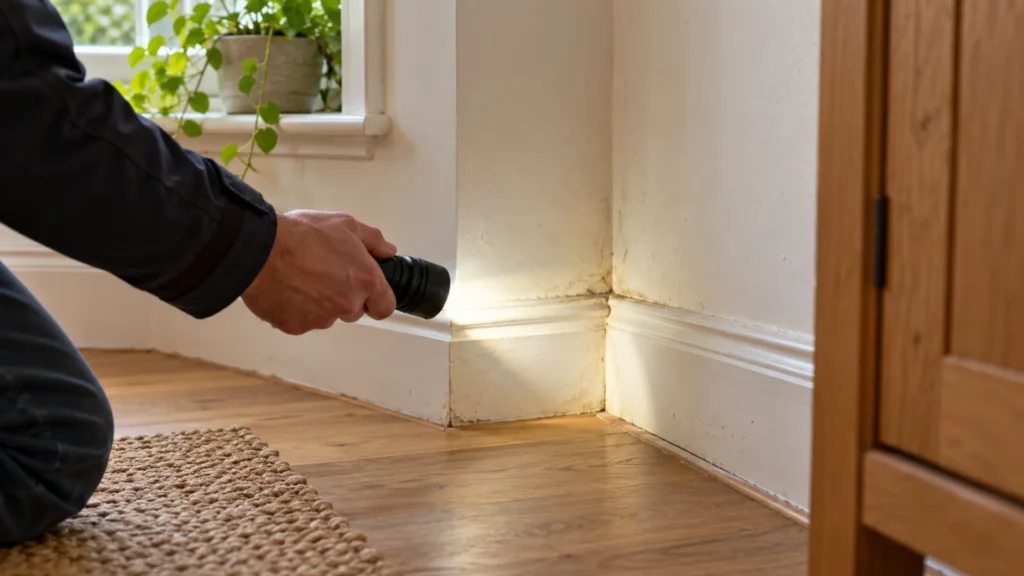
| Torch | The roof space, under-sink cupboards and dark corners |
| Tape measure | Checking that your furniture fits |
| Phone | Your checklist, notes and photos, once the agent says yes |
| Deal-breakers list | Keeping your budget in charge of the day |
What to look for when viewing a house
Check four things in every house: the inside, the energy performance, the outside and the surroundings. Work through every property in the same order, and look past the décor, because paint and furniture are the cheapest things to change.
House viewing checklist for buyers in Ireland
The checklist breaks the same checks into six rows, from structure to surroundings.
| Area | What to check | The question it answers |
| Structure | Walls, floors, door frames | Has anything moved? |
| Water | Taps, toilets, drains | Does the flow stay strong and steady? |
| Power | Sockets, switches, wiring panel | Does anything look old or scorched? |
| Warmth | Radiators, insulation, rating | What will it cost to heat? |
| Outside | Roof, gutters, boundaries | Who owns what, and what needs repair? |
| Surroundings | Parking, traffic, sound | What will a weekday evening sound like? |
What should you check inside a house before buying it?
Most of your half hour goes on the inside: the walls and ceiling, any damp, the doors and windows, the water supply, the wiring and the storage. Look for cracks in the wall that run diagonally from the corner of a window or door, since those can signal subsidence.
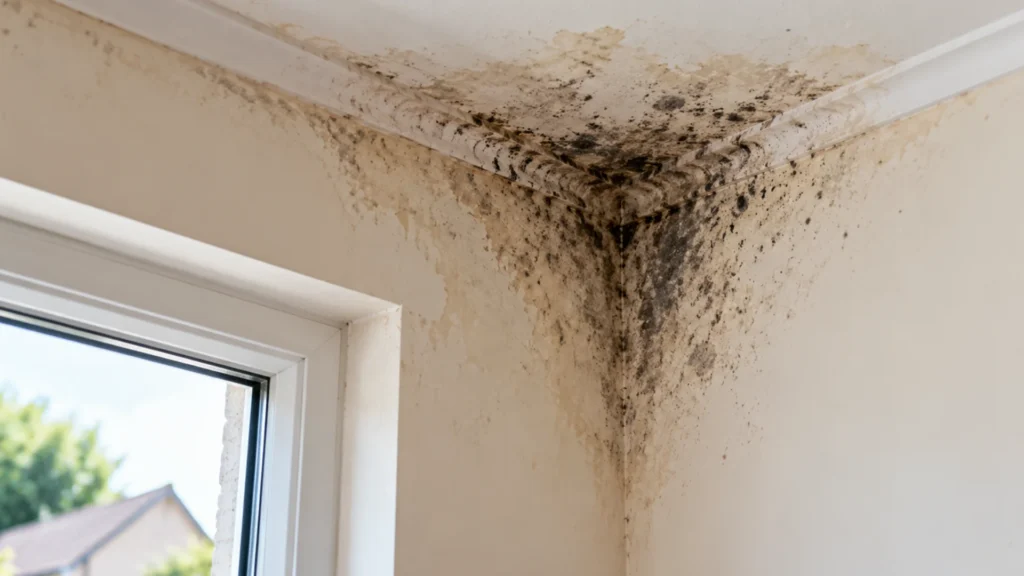
Signs of damp come next. Damp patches, mould and tide marks on a wall, around a window or along the skirting board point to a leak or poor ventilation. Condensation on windows and cold walls points the same way.
Trust your nose. A musty room, a heavy air freshener or a freshly painted patch? Ask why, because each can cover damp.
Open every door and window. Windows that jam or doors that stick can mean the frame has moved.
Look at the window frames for rot or gaps, and check whether the glass is double-glazed. Misting between the panes means the seal has failed.
Run every tap and flush every toilet. Check water pressure and drainage, because a weak shower or a slow drain is a daily irritation you inherit.
Then find the fuse board. An old, unlabelled board, or scorched sockets nearby, can mean the house needs a rewire. Find the hot water cylinder as well, if there is one, and look for leaks, stains or rust.
In each room, test the storage space and note any work needs, so you can price them before you commit.
What does a BER certificate tell you?
SEAI describes the BER certificate as an indicator of a property’s energy efficiency, and the advisory report as recommendations to improve it. Buyers can request the BER certificate and advisory report. SEAI states that the BER Regulations (SI 243/2012) require both for any building that changes hands, and they require sale advertisements to include the BER, with some exemptions such as protected structures.
The BER rating can give you an indication of the energy bills ahead. The advisory report’s upgrade list, such as insulation or a heat pump, helps you estimate the potential costs of bringing a cold house up to standard. The rating is a guide, not a guarantee of your bills.
What you need to inspect outside the house and nearby
Outside, inspect the roof, the gutters, the boundaries and the parking, then the noise and the neighbourhood. Look at the roof for slipped or missing tiles, the gutters for blockages and the walls for stains below the downpipes. Confirm who owns each boundary, where you can park and where the bins go.
Stand in the garden and listen. Noise levels from a road, a railway or a dog next door are impossible to judge from a brochure. Walk around the area as well: the school-run traffic, the evening noise and the state of the gardens show you what daily life will feel like.
Rural homes in Kildare and Meath add two more checks. Ask whether the property uses mains water and sewerage or a private well and septic tank, then ask for the service and registration records for the tank.
What changes when you view an apartment or a new build?
In an apartment, look at the shared hallways, the bin store, the lifts and the parking, because you share them with every other owner. Ask what the annual management fee covers, whether the management company keeps a sinking fund, which is a reserve for major repairs such as the roof or a lift, and whether the company plans any large works. A solicitor can review the management company’s paperwork before you commit.
In a new build, walk every room with a torch and list each small defect, because a written snag list gives you something concrete to raise with the agent.
What are the biggest red flags in a house?
The biggest house viewing red flags are damp that someone has covered up, missing planning paperwork, a flood history and a property that has sat on the market far longer than similar homes.
Paperwork matters for any extension or conversion. Under Irish planning rules, an extension, attic conversion or garage conversion either holds planning permission or falls within the exemptions. A buyer’s solicitor requests the documents for any such work and can advise on the position for a specific property.
Flood history needs a direct question. A previous flood can affect your home insurance and your mortgage options, so get an insurance quote before you commit.
A listing history can say as much as the walls. A property that sits unsold while similar homes sell, or drops its price more than once, needs an explanation.
If you spot several of these, bring an engineer or a surveyor before you spend more time or money. Your own inspection spots warning signs, and their report tests them. For an older property or one that shows movement, it’s always a good idea to get a proper structural survey. A lender’s valuation is a separate check that protects the lender.

What should you ask the estate agent when viewing a house?
The questions to ask at a house viewing fall into three groups: the vendor and the sale, the property’s condition, and the title and yearly charges. Arrive with a list of questions and treat the answers as information. The best ones have factual answers, such as a date, a cost or a document.
Why is the vendor selling, and what does the sale include?
The first question to ask is why the vendor is selling, because a vendor with a deadline behaves differently from one testing the market. Ask how long the agent has marketed the property, whether the price has changed and how much interest the agent has seen. Ask what the vendor has included in the sale, because fixtures and fittings, white goods and garden sheds stay or go according to the contract.
It’s good to know whether the vendor has found somewhere to buy, because a vendor with a chain behind them moves at the speed of that chain.
What are the key questions to ask about a property’s condition?
How old is the boiler, and when did anyone last service it? Has the property ever had damp, a leak or a flood?
Which extensions or conversions came after the original build, and where are the documents? What did the vendor spend on insulation, windows or heating, and do receipts exist?
Do ground rent or management fees apply to the property?
It depends on the property’s title, so ask whether it is freehold or leasehold and which yearly charges apply. Some Irish properties, including many apartments, sit on leasehold title and carry ground rent.
Apartments and many managed estates also charge an annual management fee, so ask for the amount. Pass every answer to your solicitor, who checks the title and the paperwork behind it.
A change of subject tells you something too.

Should you view a house more than once?
Book a second viewing before you commit to anything. The first visit tells you whether you like the house. The second tells you whether you can live with it.
Different times of day show different houses: a weekday morning shows the commute traffic, an evening shows the noise and the parking, and heavy rain is the best day to see how the roof, the gutters and the drains cope.
Top tip: ask before you photograph a room.
A builder or a relative who has bought before makes a useful second pair of eyes. If a neighbour is outside, a short chat about parking and the road is worth the two minutes.

What other costs come with buying a home?
Once a house passes your checks, three costs come on top of the purchase price: stamp duty, solicitor fees and survey or engineer fees. Whether you’re buying your first home or trading up, the hidden costs guide on this site covers the full cost of buying a home, from insurance to moving day.
How much is stamp duty on a house in Ireland?
Revenue’s published residential stamp duty rates are 1% on the price up to €1 million, 2% on the part between €1 million and €1.5 million, and 6% on the part above €1.5 million. The buyer pays stamp duty to Revenue.
Revenue states that the exemptions and reliefs that applied to first-time buyers no longer apply. A solicitor confirms what applies in a specific purchase.
Solicitor fees
A buyer’s solicitor handles the contract, the title checks and the registration. Fees vary between firms, VAT and outlays come on top, and a solicitor can supply an itemised written quote before instruction.
Survey and engineer fees
A structural survey or an engineer’s report costs more for larger and older properties. A report adds an upfront cost, and it can give you a stronger hand in negotiation if it finds repairs.
What happens after you make an offer on a house?
If you want the house, tell the agent and make an offer, usually in writing through the agent. In a private treaty sale, the agent passes your offer to the vendor, who can accept it, reject it or counter it. This guide to how to buy property in Ireland covers the full buying process.
Agents often have several potential buyers interested in a well-priced home, so set your limit before the first call, not during it.
When the vendor accepts, the property goes sale agreed and the buyer usually pays a booking deposit to the agent. In a private treaty sale, that step does not make the purchase legally binding.
Gov.ie explains that the agent must pass any further offer to the vendor, and that the vendor can accept a new offer until the parties sign contracts, so the purchase binds both sides only at that point. The same page states that the booking deposit is fully refundable until both sides sign and exchange contracts. A solicitor can advise on the position in a specific sale.
This guide to what happens between sale agreed and closing walks through the timeline.
The lending side runs alongside, and gov.ie points buyers to the lender’s formal letter of offer before they sign a contract of sale. A mortgage adviser can confirm the steps for a specific loan.
The best time to ask the hard question is while you are still standing in the hallway.

Selling before you buy? Free property valuation in Kildare and Meath
What happens at a house viewing is only half of your buying plan, because the other half is what your own home will sell for. Until you have a realistic price, you cannot set a budget or plan your timing. Every check on this page is also one a future buyer will run on your home.
A free property valuation from DNG Farrelly Southern gives you that price. The team works across Kildare and Meath daily, so the price range reflects what buyers are paying now. A valuation is an informed opinion on price and does not guarantee what a buyer will pay. If your home is in Maynooth, this guide to selling your house in Maynooth walks through the steps.
There is no obligation to list, and no pressure to decide before you are ready. If you need to sell before you buy, book my free valuation and set your budget on real numbers before you view anything else.