

Buying a house at auction in Ireland creates a binding contract the moment the hammer falls, with a deposit of usually 10% due that day and completion typically three to four weeks later.
A buyer cannot make the purchase conditional on a mortgage, a survey or a solicitor’s review, so the risk moves onto the buyer. Four things decide how that goes: the title, the physical condition, the finance and the budget, and buyers settle all four before the first bid.
That speed suits sellers. For buyers, the preparation takes longer than the bidding, so the work comes first and the bid comes last.
How does buying a house at auction work in Ireland?
Buying a property at auction runs in a fixed order. Estate agents and auctioneers list properties for sale in a catalogue or online, and the buyer arranges a viewing and gets the legal pack, the bundle of contract and title documents the seller’s solicitor prepares. A solicitor reviews it, a surveyor inspects the property and a lender issues a loan offer if the buyer needs one.
The buyer then registers, bids on the day and, if the bid wins, signs the contract and pays the deposit. Completion follows on the date in the contract.
Property auctions in Ireland run in a room, as online property auctions, or as a mix of the two. Online platforms usually ask bidders to register in advance with photo ID, proof of address and solicitor details. One Irish platform recommends registering at least 48 hours before the auction so approval comes through in time.
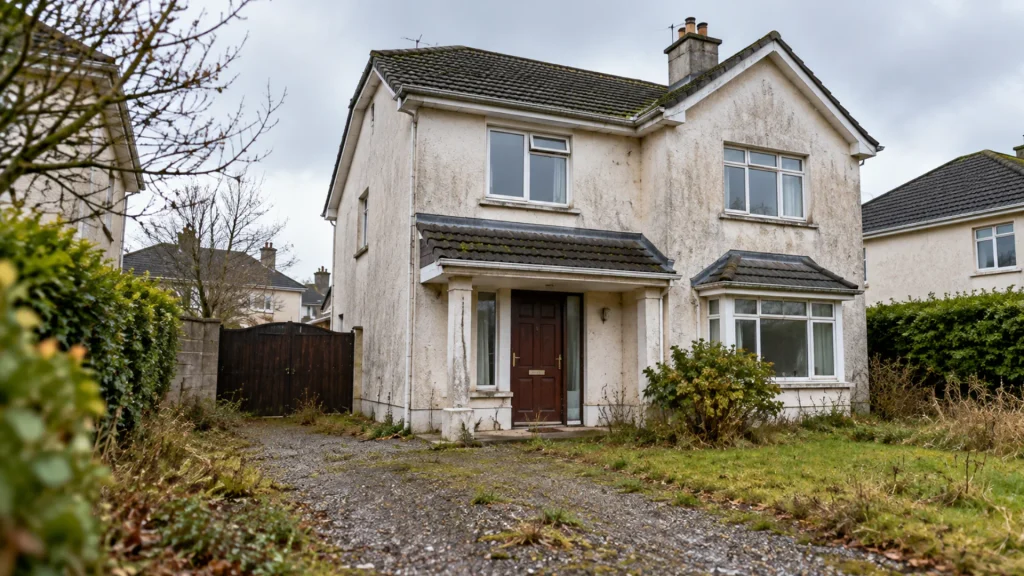
Why do sellers put a house up for auction?
A buyer looking at an auction lot often asks why the seller picked that route. Certainty is the usual reason. Bidding takes place on a set date, the contract is generally unconditional, and the completion date follows from it, so the seller knows when the sale closes.
Public bidding also offers transparency, because competing bidders set the price on the day instead of two parties negotiating in private. For a buyer, that means seeing the competing demand directly rather than hearing about it second-hand.
Probate sales, vacant houses needing renovation, refurbishment or conversion, hard-to-value properties and tenanted investment property all appear at auction regularly. Banks and receivers also sell repossessed property this way.
Some properties reach auction because a title or planning issue would slow a private treaty sale, where the seller lists at an asking price and negotiates offers privately.
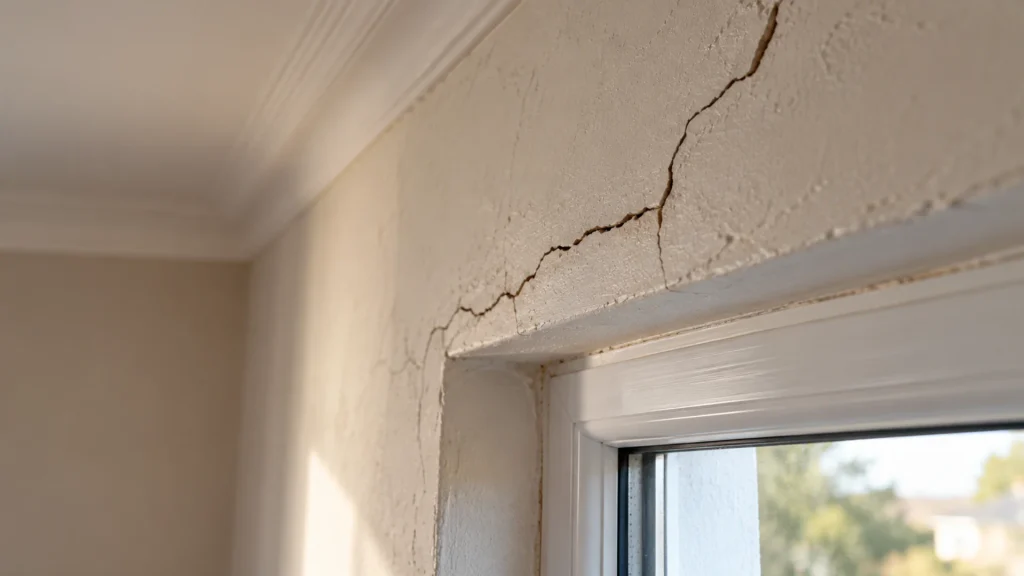
Is buying a house at auction safe?
Buying at auction carries more risk than a private treaty purchase, because the contract is generally unconditional. How safe an auction purchase turns out depends on the checking that happens first. Irish solicitors describe the principle as buyer beware: the buyer takes the property in the condition and with the title it has, and the contract does not allow the buyer to withdraw afterwards.
Of the four factors, the title, the physical condition and the finance carry the main risks, while the budget is the buyer’s own decision.
The title can contain defects, or the planning history can include unauthorised works, boundary disputes or sitting tenants. Some structural problems, such as damp, stay hidden until a survey. The finance can fall short of the winning bid, although a buyer with a mortgage can still buy at auction when the loan offer is in place beforehand.
Can you back out of a winning auction bid?
No. A bidder cannot withdraw a bid once the auctioneer accepts it, and the fall of the hammer creates the contract.
Irish law firms’ guides state that a buyer who cannot complete risks the deposit, which is generally non-refundable. The seller’s further remedies depend on the contract and the circumstances.
Auction contracts are generally unconditional, so no cooling-off period usually follows. A solicitor can confirm how these terms apply to a specific contract.
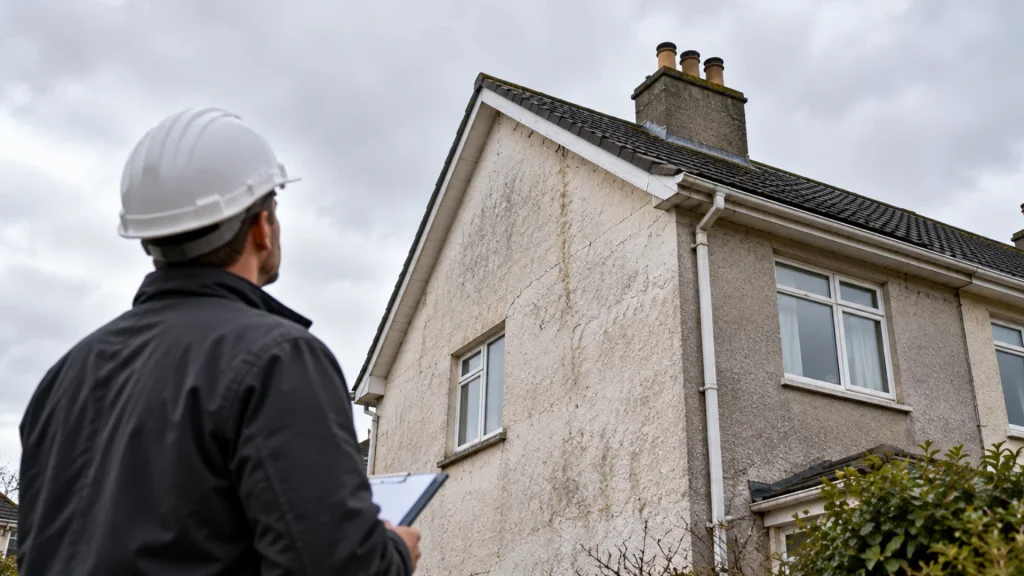
What do buyers check before an auction?
The first check is the legal pack: the contract for sale, the special conditions, the title documents and usually a map and planning documents. Irish solicitors’ guides describe a solicitor review of it as the first step, because the contract in the pack is the contract the winning bidder signs, and its special conditions set the exact obligations.
The building is next. A chartered surveyor or engineer inspects the structure and the boundaries, and a report only helps if it exists before bidding, since auction contracts typically carry no survey condition. Depending on the works, extensions and attic or garage conversions can require planning permission and compliance certificates, and a search of the local authority’s planning record shows what exists.
What gets examined varies with the property. A semi-detached house with an extension raises planning questions, and an apartment raises the management company and its service charges.
One check happens on the day: confirm on the morning that the property has not gone in a pre-auction sale or come off the market, because auctioneers can take offers before the day.
If a property is withdrawn or sold before the auction, no auction takes place and no contract arises. Survey and legal costs already incurred stay with the buyer, and the platform’s terms govern any registration deposit. A solicitor and a surveyor can confirm what applies to a specific property.
What do guide price, AMV and reserve price mean?
The guide price is the auctioneer’s indication of where the property will probably sell. It is not a price the seller has agreed to accept, so a budget built on the guide price alone can fall short. The Property Price Register lists the sale prices declared for stamp duty on residential properties sold since 2010, which gives a reference point for comparable homes.
The advised market value, or AMV, is the licensed auctioneer’s reasonable estimate of what a willing buyer would pay after proper marketing, expressed as a price range. The AMV is the figure the auctioneer gives the seller, while the guide price is the figure marketed to buyers, and the two are not necessarily the same.
Section 56 of the Property Services (Regulation) Act 2011 prevents a licensee from stating an estimated selling price, for example in an advertisement or to a prospective purchaser, below the AMV given to the seller, or below the lower limit where the AMV is a range. A licensee can adjust the AMV with the seller’s written consent to reflect market conditions.
The reserve price is the minimum the seller will accept. The seller and auctioneer agree it before the auction and keep it confidential, so bidders see the bidding and not the figure.
What happens if the reserve is not met?
If bidding does not reach the reserve, including with a single bidder, the property normally cannot sell under the hammer on the day unless the seller agrees to a lower price.
After the auction, the seller can still accept the highest bid made, and the auctioneer can open talks with that bidder. Otherwise the property typically returns to the market by private treaty. The auctioneer can explain how this works for a specific lot.

Can you buy a house at auction with a mortgage?
Yes, and Irish solicitors’ guides describe the order of events: the loan offer arrives before the auction, not after it. An auction contract typically carries no subject-to-finance clause, the condition that ties a purchase to a loan, and the closing date cannot depend on loan approval.
Mortgage approval in principle is an early indication from a lender, and it sits a step below a letter of loan offer. On its own it generally leaves the financial risk of bidding in place. A loan offer can carry outstanding conditions, so it does not by itself guarantee completion.
A lender lends against its own valuation, so a winning bid above it leaves the buyer to fund the gap. For illustration, a €400,000 bid against a €380,000 valuation leaves a €20,000 gap.
Lenders also apply their own title and condition requirements. The lender’s own terms and a solicitor’s reading of the contract settle how this applies to a specific property.
Can first-time buyers buy a house at auction in Ireland?
Yes. Auctions are open to any registered bidder, including first-time buyers, and the contract terms are the same as for any other buyer, so the loan offer and the legal pack both come before bidding.
Government supports carry their own property rules. The Help to Buy scheme applies only to newly built homes and self-builds, so it does not cover a second-hand home bought at auction, and other schemes, such as the First Home Scheme, set their own eligibility rules.
The guide to how much deposit a buyer needs to buy a house in Ireland covers the 10% rule, Help to Buy and the First Home Scheme in more detail. A lender, Revenue or a solicitor can confirm which supports apply to a specific purchase.
With finance lined up, auction day itself is short.

What happens on auction day?
Bidding happens in the room or online. In a room, you raise your hand or catalogue. Online, you bid through the platform. Bids rise in increments, and the auctioneer commonly signals when bidding passes the reserve. Some online platforms flag it too.
The highest bidder above the reserve wins when the hammer falls. Immediately afterwards, the winner signs the contract, pays the deposit and covers any buyer’s fee, and the solicitor takes over the conveyancing, the legal transfer of the property.
An auction can move quickly. A rival bidder who raises a hand twice in a few seconds can pull a buyer past the planned price. An absolute maximum the buyer fixes at home, including stamp duty and fees, holds up better than a limit the buyer invents in the room.
The winning bid is only part of the total purchase cost.

What deposit and fees apply when buying at auction?
The deposit is usually 10% of the price, paid when the winning bidder signs the contract on the day, and it counts towards the price. Some auctioneers set a minimum deposit for lower-priced properties, and the balance falls due on completion. Irish law firms’ guides describe the deposit as generally non-refundable.
Some auctioneers and online platforms also charge the buyer an administration or buyer’s fee on top of the price. The amount varies, and the auction terms in the catalogue state it.
The auctioneer acts for the seller, and the seller normally pays the commission. The contract’s special conditions set the deposit and fee terms, and a solicitor can read them against a specific purchase.
Does losing an auction bid cost you money?
An unsuccessful bidder does not pay the contract deposit. Some online platforms take a registration deposit before bidding and release it to unsuccessful bidders, and the platform’s terms set out the conditions. Registration requirements and deposit amounts differ between platforms.

How long does completion take after winning an auction?
The contract sets the closing date. Irish solicitors’ guides describe three to four weeks after the auction as typical, and some online platforms cite 28 days. A buyer who misses the date can face interest on the balance and a risk to the deposit, and the seller can serve a completion notice, a formal notice requiring the buyer to complete.
The same guides state that the property typically becomes the buyer’s insurable risk from the date of the auction, subject to the contract’s risk provisions, and buyers usually arrange cover before bidding. A solicitor can confirm the closing date and the risk position in a specific contract.
What does buying a house at auction cost in total?
Beyond the price, a buyer funds stamp duty, professional fees and insurance. The deposit is part of the price, paid early.
| Cost | What applies | When it falls due |
| Deposit (credited towards the price) | Usually 10% of the price | On the day, at contract signing |
| Buyer’s or administration fee | The auctioneer or platform sets the amount | On the day |
| Stamp duty | Residential, standard rates: 1% up to €1,000,000, 2% on the part from €1,000,000 to €1,500,000, 6% above €1,500,000 | Revenue allows 44 days from signing the instrument to file the return and pay; the solicitor usually files it through Revenue’s online system |
| Solicitor fees | The solicitor quotes a fee, which varies with the complexity of the title | Around completion |
| Survey or engineer’s report | The surveyor quotes a fee, which varies with the property | Before auction day |
| Insurance | The insurer quotes a premium | From the date of the auction |
Under Revenue’s published stamp duty rates, the residential bands apply to instruments executed on or after 2 October 2024. Non-residential property carries a 7.5% rate. The buyer normally pays stamp duty.
On a €400,000 residential property purchase, a 10% deposit is €40,000 on the day, the remaining €360,000 falls due on completion, and stamp duty at 1% is €4,000. On €1,200,000, stamp duty is €10,000 on the first €1,000,000 plus €4,000 on the remaining €200,000, a total of €14,000. Revenue, a solicitor or a tax adviser can confirm the amount payable on a specific purchase.
Several of those costs arrive sooner than they would on a private treaty purchase.
How does buying at auction differ from private treaty?
A seller who has received an offer takes a booking deposit, which stays refundable, and either side can withdraw until the parties sign contracts.
| Auction | Private treaty | |
| Price | Competitive bidding sets the price on the day, above a confidential reserve | Buyer and seller negotiate privately from an asking price |
| Contract | Generally unconditional, with signing on the day | Signing follows the legal review, weeks after sale agreed |
| Conditions | Typically no subject-to-finance or survey condition | Offers typically proceed subject to contract, finance and survey |
| Deposit | Usually 10% on the day, generally non-refundable | A refundable booking deposit first, then 10% when the parties sign contracts |
| Timeline | Typically three to four weeks after the auction | Six to eight weeks from sale agreed for a well-prepared sale, and longer where documents lag |
On the open market, the stages run from sale agreed through signed contracts to closing. A solicitor can set the two routes side by side for a specific purchase.
Auction suits buyers who can accept a contract with few conditions on a fixed timetable, and private treaty suits buyers who need conditions.

Free Property Valuation in Kildare and Meath
If you are weighing the sale of your own home in Kildare or Meath rather than a purchase, a free valuation from DNG Farrelly Southern shows which route suits it, auction or private treaty. You can compare the selling options first, or call (01) 651 7000 to book it.