
You’ve seen the letters on every property listing. A1, B2, D1, G. But do you actually know what your BER rating means for your energy bills, your mortgage, or the sale price of your home?
BER ratings and why they matter have become one of the most important factors in the Irish property market in 2026. In this guide, you’ll learn exactly what the rating scale means, how it affects your property value, what buyers and sellers need to know, and how solar panels can push your rating up fast.
What Is a BER Rating and Why Does It Matter in Ireland?
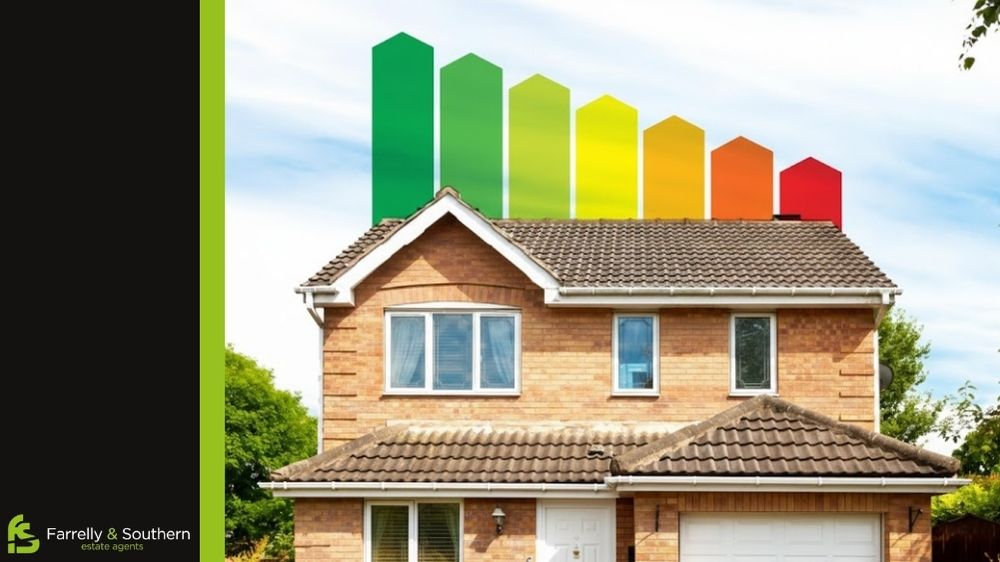
BER stands for Building Energy Rating. It measures how energy-efficient a home is on a scale from A1 at the top to G at the bottom. Every property sold or rented in Ireland is legally required to have a valid BER certificate.
A BER assessment looks at your home’s walls, roof, floors, windows, heating system, ventilation, and renewable energy sources. An assessor calculates how much energy the property needs to maintain a comfortable temperature over a full year. The result is expressed in kWh per square metre per year and translated into a letter rating.
The lower the energy demand, the higher the rating. An A-rated home uses energy very efficiently. A G-rated home is essentially a heat sieve.
The BER Rating Scale Explained
| Rating | Energy Use (kWh/m²/yr) | What It Means |
|---|---|---|
| A1 | Less than 25 | Near-zero energy building |
| A2 | 25 to 50 | Excellent efficiency |
| A3 | 50 to 75 | Very good efficiency |
| B1 | 75 to 100 | Good efficiency |
| B2 | 100 to 125 | Above average |
| B3 | 125 to 150 | Average new build |
| C1 | 150 to 175 | Below average |
| C2 | 175 to 200 | Common in 1990s builds |
| D1 | 200 to 225 | Typical older semi-d |
| D2 | 225 to 260 | Older stock with minimal insulation |
| E | 260 to 300 | Poor efficiency |
| F | 300 to 380 | Very poor |
| G | Above 380 | Worst performing |
Most homes in the North-West of Ireland built before 2000 sit somewhere between D1 and E. A lot of rural properties in Sligo, Mayo, and Donegal fall into this bracket due to age, construction type, and heating systems.
Why BER Ratings Matter When Selling a Home
A good BER rating sells your home faster and for more money. That’s not a marketing claim. It’s backed by data from the Irish property market.
Research from the ESRI found that a one-letter BER improvement adds approximately 3% to the sale price of a property. On a €300,000 home, that’s €9,000. Moving two letters up from D to B could add €18,000 to your sale price on a property at that value.
Buyers in 2026 are more energy-aware than ever. High energy costs since 2022 have made running costs a genuine factor in purchasing decisions. A C-rated house with gas heating is less attractive than it was five years ago.
BER Certificates Are Legally Required When Selling
You must have a valid BER certificate before you list your property for sale. It’s a legal requirement under SI 243 of 2012. An estate agent cannot advertise your property without the BER rating displayed.
A BER assessment costs between €150 and €300 depending on the assessor and property size. The certificate is valid for 10 years. If you’ve made significant energy upgrades since your last assessment, it’s worth getting a new one done before you sell.
Why BER Ratings Matter When Buying a Home
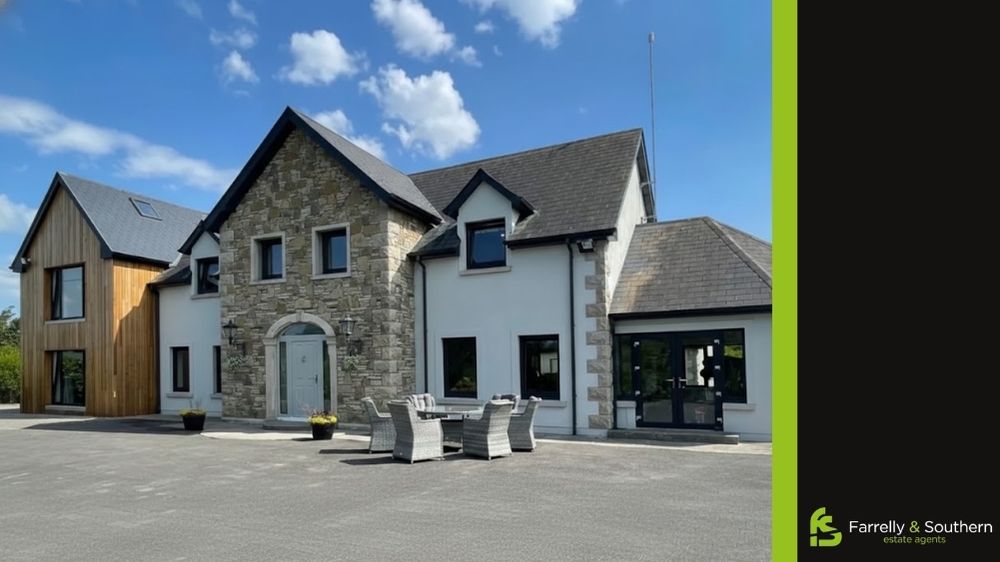
If you’re buying, the BER rating tells you what you’re walking into in terms of energy costs. A D-rated house in Carrick-on-Shannon will cost you significantly more to heat every winter than a B2-rated house of the same size in the same town.
Average annual energy costs for Irish homes vary widely by BER rating. An A-rated home costs roughly €600 to €900 per year to heat. A D-rated home can cost €2,000 to €3,000. An F or G-rated home regularly exceeds €4,000 per year. Over 10 years, that gap runs into tens of thousands of euros.
BER Ratings and Mortgages
Green mortgages are now offered by most Irish lenders including AIB, Bank of Ireland, and Permanent TSB. These mortgages offer preferential interest rates for properties with a BER rating of B3 or higher.
The rate difference varies by lender but typically runs between 0.1% and 0.3% below standard variable rates. On a €250,000 mortgage over 30 years, even a 0.2% rate reduction saves approximately €8,000 to €10,000 in interest payments. A strong BER rating has a direct financial benefit beyond your energy bills.
How Solar Panels Improve Your BER Rating
This is where it gets interesting. Solar panels are one of the most effective single upgrades you can make to improve your BER rating. A BER assessment credits your home for on-site renewable energy generation.
Installing a 4kWp solar PV system on a D-rated semi-detached in Sligo or Mayo can move the property up by one to two BER ratings. The exact improvement depends on your home’s current heating system, insulation levels, and how the assessor models your consumption versus generation.
Combined with other upgrades like attic insulation, heat pump installation, or heating controls, solar panels contribute to pushing homes into the B range, which unlocks green mortgage rates and maximises resale value.
Solar Generation have completed installations for residential clients across the North-West, and many of those projects have been specifically tied to improving BER ratings ahead of a property sale or refinancing.
What Improvements Have the Biggest Impact on BER Ratings?
Not all upgrades are created equal. Here’s how common improvements stack up in terms of BER impact and typical cost in 2026.
| Upgrade | Typical BER Improvement | Estimated Cost | Grant Available |
|---|---|---|---|
| Solar PV (4kWp) | 1 to 2 ratings | €8,000 to €12,000 | Yes, up to €2,400 |
| Attic insulation | 0.5 to 1 rating | €1,000 to €2,500 | Yes, up to €1,500 |
| External wall insulation | 1 to 2 ratings | €8,000 to €20,000 | Yes, up to €8,000 |
| Heat pump (air to water) | 2 to 3 ratings | €12,000 to €18,000 | Yes, up to €6,500 |
| Heating controls upgrade | 0.5 rating | €500 to €1,500 | Yes, up to €700 |
| Triple glazed windows | 0.5 to 1 rating | €5,000 to €15,000 | No |
If you’re planning a BER upgrade ahead of selling, get a provisional BER assessment done first. This tells you exactly which measures will have the most impact on your specific property. It saves you from spending money on upgrades that move the needle least.
How to Get a BER Assessment in Ireland
The process is straightforward. Here’s how it works step by step.
Find a registered BER assessor on the SEAI national register at seai.ie. Only SEAI-registered assessors can issue valid BER certificates. Book an assessment and the assessor visits your property in person. The visit typically takes one to two hours depending on property size. They measure the property, inspect insulation, windows, heating systems, and any renewable energy installations. They calculate the rating using SEAI’s approved software and issue you a certificate. The certificate is registered on the national BER database and is valid for 10 years.
The assessment costs between €150 and €300. Always check that the assessor is on the SEAI register before you book.
BER Ratings in the North-West: What’s Typical?
Rural and older properties in Connacht and Ulster tend to sit lower on the BER scale than urban properties. There are a few reasons for this.
Older construction standards in the 1970s, 1980s, and 1990s left most properties with minimal wall insulation, single-glazed windows, and oil-fired heating. A typical detached farmhouse in Roscommon or Leitrim will often come in at E or F without upgrades.
The good news is that SEAI grants specifically address this. The combination of attic insulation, solar PV, and a heat pump can take a rural E-rated home to a B3 or B2 with a total investment of €25,000 to €35,000. After grants, the net cost can be as low as €15,000 to €20,000.
For homeowners in Sligo, Donegal, or Mayo planning to sell within the next three to five years, that investment can pay back both through reduced running costs and increased sale price.